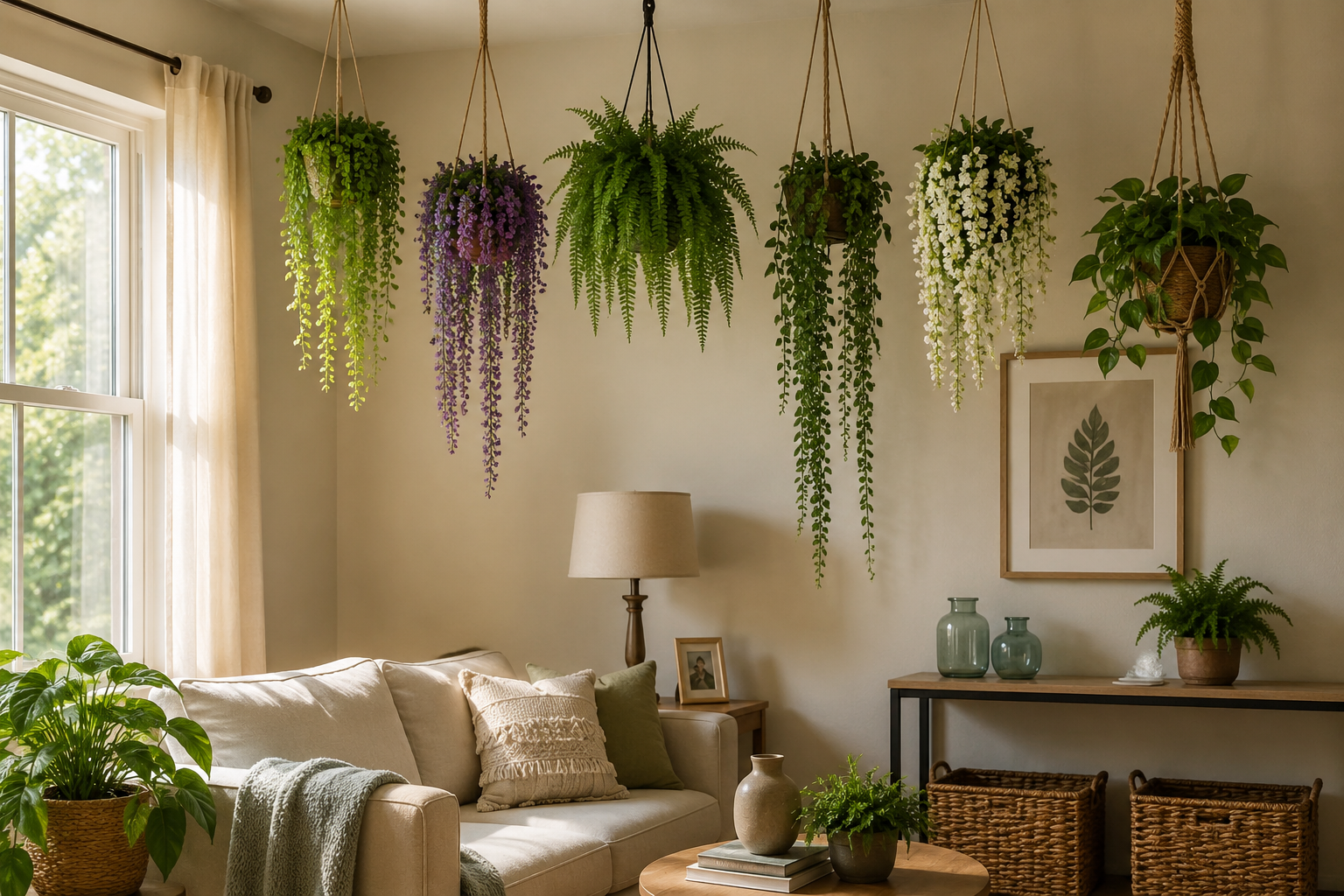
Artificial hanging plants are a popular choice for homeowners looking to enhance their decor without the maintenance that live plants require. Whether you’re aiming for a fresh look in your living room, adding a touch of nature to your office, or creating a cozy atmosphere in your bedroom, these faux plants provide a versatile solution. In this guide, we will explore the benefits of artificial hanging plants, how to choose the right ones, and tips for incorporating them into your home.
Why Choose Artificial Hanging Plants?
Artificial hanging plants offer several advantages over their live counterparts:
- Low Maintenance: Unlike live plants, artificial hanging plants do not require watering, sunlight, or pruning. This makes them ideal for busy individuals or those without a green thumb.
- Allergy-Friendly: For those with allergies, artificial plants can provide the beauty of greenery without triggering allergic reactions.
- Longevity: High-quality artificial plants can last for years without fading or wilting, making them a cost-effective choice in the long run.
- Design Versatility: Available in various styles, colors, and sizes, artificial hanging plants can fit into any decor theme, from modern to rustic.
Choosing the Right Artificial Hanging Plant
When selecting artificial hanging plants, consider the following factors:
1. Material Quality
Look for plants made from high-quality materials, such as silk or plastic, that mimic the appearance of real foliage. Check for realistic textures and colors.
2. Size and Length
Consider the space where you plan to hang the plant. Measure the area to ensure the plant will fit well and create the desired visual effect.
3. Style and Aesthetics
Choose a style that complements your existing decor. Whether you prefer cascading vines or bushy ferns, select plants that enhance your space.
4. Color Scheme
Consider the color palette of your room. Opt for plants that either match or contrast effectively with your decor to create a cohesive look.
Incorporating Artificial Hanging Plants into Your Home
Here are some tips on how to effectively use artificial hanging plants in your home:
1. Entryways
Place a vibrant hanging plant near your front door to create a welcoming atmosphere. This can set a positive tone for guests as they enter your home.
2. Living Rooms
Use artificial hanging plants to add dimension to your living room. Hang them from shelves, or use wall-mounted planters to create a layered look.
3. Bathrooms
Bathrooms can benefit from the addition of greenery. Choose moisture-resistant plants that can thrive in humid environments.
4. Offices
Incorporate hanging plants in your workspace to improve air quality and create a calming environment. They can help reduce stress and enhance productivity.
Care and Maintenance of Artificial Hanging Plants
Even though artificial plants require less care than live ones, they still need some attention:
- Dust Regularly: Use a soft cloth or a feather duster to remove dust and maintain their appearance.
- Occasional Cleaning: If your plants get particularly dirty, wash them with mild soap and water, then let them air dry.
- Avoid Direct Sunlight: To prevent fading, keep your artificial plants out of direct sunlight.
Where to Buy Artificial Hanging Plants
Many retailers offer a wide selection of artificial hanging plants. One notable option is Bed Bath & Beyond, known for its variety of home decor items, including stylish artificial plants. When shopping, compare prices and styles to find the best fit for your home.
Key Takeaways
- Artificial hanging plants are a low-maintenance, allergy-friendly option for enhancing home decor.
- Consider material quality, size, style, and color when selecting plants.
- Incorporate plants into various spaces in your home for added visual interest.
- Regular dusting and occasional cleaning will keep your artificial plants looking their best.
Practical Steps for Purchasing Artificial Hanging Plants
When you’re ready to purchase artificial hanging plants, follow these practical steps to ensure you make the best choice for your home and budget.
- Set a Budget: Determine how much you are willing to spend on artificial hanging plants. Prices can vary significantly based on quality and brand.
- Research Brands: Look into different brands available at Bed Bath & Beyond and other retailers. Read reviews to gauge customer satisfaction and product quality.
- Visit Stores: If possible, visit a physical store to see the plants in person. This allows you to assess their quality, size, and appearance more accurately.
- Compare Online: Use online platforms to compare prices and styles. Websites often have customer reviews that can help inform your decision.
- Check Return Policies: Ensure you understand the return policy in case the plants do not meet your expectations.
Comparison Criteria for Artificial Hanging Plants
When comparing different artificial hanging plants, consider the following criteria to make an informed decision:
- Material: Evaluate whether the plant is made from silk, plastic, or another material. Higher-quality materials typically look more realistic.
- Realism: Assess how lifelike the plant appears. Look for details such as color variations and texture.
- Price: Compare the prices of similar plants across different retailers. Ensure you are getting good value for your money.
- Size Options: Check if the retailer offers various sizes to fit your space needs.
- Brand Reputation: Research the brand’s reputation for quality and customer service.
Cost Factors to Consider
Understanding the cost factors associated with artificial hanging plants can help you budget effectively:
- Quality vs. Price: Higher-quality plants may cost more upfront but can save you money in the long run due to their durability.
- Shipping Costs: If purchasing online, factor in shipping costs which can add to the total price.
- Sales and Discounts: Keep an eye out for seasonal sales or discounts at Bed Bath & Beyond or other retailers.
- Accessories: Consider if you need additional items like hanging planters or hooks, which can add to your overall cost.
Alternatives to Artificial Hanging Plants
If you are considering alternatives to artificial hanging plants, here are some options:
- Real Hanging Plants: If you prefer live plants, consider low-maintenance varieties such as pothos or spider plants.
- Wall Art: Use wall art or decals that feature botanical designs to achieve a similar aesthetic without the need for plants.
- Succulent Arrangements: Small succulent arrangements can provide a similar look and require minimal care.
- Indoor Trees: For a bolder statement, consider larger indoor trees that can be placed in decorative pots.
Limitations of Artificial Hanging Plants
While artificial hanging plants have many benefits, they also come with limitations:
- Less Environmental Impact: Artificial plants do not contribute to the ecosystem like live plants do, as they do not produce oxygen or support wildlife.
- Static Aesthetic: They do not change with the seasons, which can be a drawback for those who enjoy the dynamic nature of live plants.
- Potential for Fading: Over time, some artificial plants may fade if exposed to direct sunlight, despite being marketed as UV-resistant.
Warning Signs When Buying Artificial Hanging Plants
Be aware of these warning signs to avoid purchasing low-quality artificial plants:
- Poor Construction: Check for loose leaves or branches that may easily fall off.
- Unrealistic Appearance: If the plant looks overly shiny or plastic-like, it may not provide the desired aesthetic.
- Odor: A strong chemical smell can indicate low-quality materials that may not be safe for indoor use.
Checklist for Selecting Artificial Hanging Plants
Use this checklist to ensure you cover all essential aspects when selecting artificial hanging plants:
- ✔️ Determine your budget.
- ✔️ Research and compare brands.
- ✔️ Assess material quality and realism.
- ✔️ Choose the right size for your space.
- ✔️ Consider the color scheme of your room.
- ✔️ Check for warranty or return policy.
Provider Questions to Ask
When shopping for artificial hanging plants, consider asking the following questions to the provider:
- What materials are used in the construction of the plants?
- Are these plants suitable for outdoor use?
- Do you offer a warranty or satisfaction guarantee?
- How should I clean and maintain these plants?
- Can I return the plant if it does not meet my expectations?
Practical Steps for Purchasing Artificial Hanging Plants
- Set a Budget: Determine how much you are willing to spend on artificial hanging plants. Prices can vary significantly based on quality and brand.
- Research Brands: Look into different brands available at Bed Bath & Beyond and other retailers. Read reviews to gauge customer satisfaction and product quality.
- Visit Stores: If possible, visit a physical store to see the plants in person. This allows you to assess their quality, size, and appearance more accurately.
- Compare Online: Use online platforms to compare prices and styles. Websites often have customer reviews that can help inform your decision.
- Check Return Policies: Ensure you understand the return policy in case the plants do not meet your expectations.
Comparison Criteria for Artificial Hanging Plants
| Criteria | Description |
|---|---|
| Material | Evaluate whether the plant is made from silk, plastic, or another material. Higher-quality materials typically look more realistic. |
| Realism | Assess how lifelike the plant appears. Look for details such as color variations and texture. |
| Price | Compare the prices of similar plants across different retailers. Ensure you are getting good value for your money. |
| Size Options | Check if the retailer offers various sizes to fit your space needs. |
| Brand Reputation | Research the brand’s reputation for quality and customer service. |
Cost Factors to Consider
- Quality vs. Price: Higher-quality plants may cost more upfront but can save you money in the long run due to their durability.
- Shipping Costs: If purchasing online, factor in shipping costs which can add to the total price.
- Sales and Discounts: Keep an eye out for seasonal sales or discounts at Bed Bath & Beyond or other retailers.
- Accessories: Consider if you need additional items like hanging planters or hooks, which can add to your overall cost.
Alternatives to Artificial Hanging Plants
- Real Hanging Plants: If you prefer live plants, consider low-maintenance varieties such as pothos or spider plants.
- Wall Art: Use wall art or decals that feature botanical designs to achieve a similar aesthetic without the need for plants.
- Succulent Arrangements: Small succulent arrangements can provide a similar look and require minimal care.
- Indoor Trees: For a bolder statement, consider larger indoor trees that can be placed in decorative pots.
Limitations of Artificial Hanging Plants
- Less Environmental Impact: Artificial plants do not contribute to the ecosystem like live plants do, as they do not produce oxygen or support wildlife.
- Static Aesthetic: They do not change with the seasons, which can be a drawback for those who enjoy the dynamic nature of live plants.
- Potential for Fading: Over time, some artificial plants may fade if exposed to direct sunlight, despite being marketed as UV-resistant.
Warning Signs When Buying Artificial Hanging Plants
- Poor Construction: Check for loose leaves or branches that may easily fall off.
- Unrealistic Appearance: If the plant looks overly shiny or plastic-like, it may not provide the desired aesthetic.
- Odor: A strong chemical smell can indicate low-quality materials that may not be safe for indoor use.
Checklist for Selecting Artificial Hanging Plants
- ✔️ Determine your budget.
- ✔️ Research and compare brands.
- ✔️ Assess material quality and realism.
- ✔️ Choose the right size for your space.
- ✔️ Consider the color scheme of your room.
- ✔️ Check for warranty or return policy.
Provider Questions to Ask
- What materials are used in the construction of the plants?
- Are these plants suitable for outdoor use?
- Do you offer a warranty or satisfaction guarantee?
- How should I clean and maintain these plants?
- Can I return the plant if it does not meet my expectations?
Additional Considerations When Buying Artificial Hanging Plants
Practical Steps for Ensuring Quality
When purchasing artificial hanging plants, it’s essential to take additional steps to ensure you are getting a quality product. Here are some practical steps to follow:
- Inspect for Realism: Look closely at the leaves and flowers for realistic textures and colors. A good quality plant should have a natural look.
- Check for UV Resistance: If you plan to use the plants outdoors, ensure they are UV resistant to prevent fading.
- Examine the Base: Ensure the base of the plant is sturdy and well-constructed to support the weight of the hanging plant.
- Ask for Samples: If possible, request a sample or view multiple units to compare quality before making a purchase.
Comparison Criteria for Different Retailers
When shopping at various retailers, keep these comparison criteria in mind to make an informed choice:
- Customer Reviews: Look for feedback from previous buyers to gauge satisfaction and product performance.
- Return Policy: Understand the return policy in case the product does not meet your expectations.
- Shipping Options: Compare shipping costs and delivery times between retailers.
- Store Reputation: Consider the reputation of the retailer for customer service and product quality.
Cost Factors to Evaluate
In addition to the basic cost of the plants, consider these factors that can influence your overall expenditure:
- Installation Costs: If you require professional installation for hanging, factor in these costs.
- Maintenance Accessories: Consider if you need additional accessories like hooks or planters, which can add to your total cost.
- Bulk Purchase Discounts: Some retailers may offer discounts for bulk purchases, which can be beneficial if you plan to buy multiple plants.
Alternatives to Consider
If you are still undecided, consider these alternatives that can provide a similar aesthetic:
- Hanging Terrariums: Use glass terrariums with decorative stones and air plants for a unique look.
- Macrame Plant Hangers: Combine with real plants for a trendy look that adds texture to your space.
- Artificial Floral Arrangements: Use arrangements that can be placed on shelves or tables for a different approach to greenery.
Limitations to Keep in Mind
While artificial hanging plants are versatile, they do have limitations that should be considered:
- No Air Purification: Unlike live plants, artificial plants do not purify the air.
- Static Design: They do not change or grow, which may not appeal to those who enjoy the evolving nature of live plants.
Warning Signs of Poor Quality
Be vigilant for these warning signs that may indicate a low-quality product:
- Inconsistent Color: If the color of the leaves or flowers is inconsistent, it may indicate poor manufacturing.
- Weak Stems: Check if the stems feel flimsy or easily bend; this can affect the longevity of the plant.
Comprehensive Checklist for Selection
Use this comprehensive checklist to ensure you cover all essential aspects when selecting artificial hanging plants:
- ✔️ Assess the realism of the plant.
- ✔️ Verify UV resistance if intended for outdoor use.
- ✔️ Check the sturdiness of the base.
- ✔️ Compare customer reviews across retailers.
- ✔️ Understand the return policy and shipping options.
Provider Questions to Consider
When engaging with providers, consider asking these additional questions:
- What is the expected lifespan of the product?
- Are there any specific cleaning instructions to follow?
- Do you offer customization options for size or color?
Practical Steps for Ensuring Quality
- Inspect for Realism: Look closely at the leaves and flowers for realistic textures and colors. A good quality plant should have a natural look.
- Check for UV Resistance: If you plan to use the plants outdoors, ensure they are UV resistant to prevent fading.
- Examine the Base: Ensure the base of the plant is sturdy and well-constructed to support the weight of the hanging plant.
- Ask for Samples: If possible, request a sample or view multiple units to compare quality before making a purchase.
Comparison Criteria for Different Retailers
- Customer Reviews: Look for feedback from previous buyers to gauge satisfaction and product performance.
- Return Policy: Understand the return policy in case the product does not meet your expectations.
- Shipping Options: Compare shipping costs and delivery times between retailers.
- Store Reputation: Consider the reputation of the retailer for customer service and product quality.
Cost Factors to Evaluate
- Installation Costs: If you require professional installation for hanging, factor in these costs.
- Maintenance Accessories: Consider if you need additional accessories like hooks or planters, which can add to your total cost.
- Bulk Purchase Discounts: Some retailers may offer discounts for bulk purchases, which can be beneficial if you plan to buy multiple plants.
Alternatives to Consider
- Hanging Terrariums: Use glass terrariums with decorative stones and air plants for a unique look.
- Macrame Plant Hangers: Combine with real plants for a trendy look that adds texture to your space.
- Artificial Floral Arrangements: Use arrangements that can be placed on shelves or tables for a different approach to greenery.
Limitations to Keep in Mind
- No Air Purification: Unlike live plants, artificial plants do not purify the air.
- Static Design: They do not change or grow, which may not appeal to those who enjoy the evolving nature of live plants.
Warning Signs of Poor Quality
- Inconsistent Color: If the color of the leaves or flowers is inconsistent, it may indicate poor manufacturing.
- Weak Stems: Check if the stems feel flimsy or easily bend; this can affect the longevity of the plant.
Comprehensive Checklist for Selection
- ✔️ Assess the realism of the plant.
- ✔️ Verify UV resistance if intended for outdoor use.
- ✔️ Check the sturdiness of the base.
- ✔️ Compare customer reviews across retailers.
- ✔️ Understand the return policy and shipping options.
Provider Questions to Consider
- What is the expected lifespan of the product?
- Are there any specific cleaning instructions to follow?
- Do you offer customization options for size or color?
FAQs About Artificial Hanging Plants
1. How long do artificial hanging plants last?
High-quality artificial plants can last for many years, often outlasting live plants.
2. Can artificial hanging plants be used outdoors?
Some artificial plants are designed for outdoor use, but check the manufacturer’s specifications to ensure durability against the elements.
3. Are artificial plants safe for pets?
Most artificial plants are non-toxic, but it’s always best to check the materials used in their construction.
4. How do I hang artificial plants?
Use hooks, wall-mounted planters, or shelves to display your hanging plants. Ensure they are securely fastened to avoid falls.
5. Can I mix artificial and real plants?
Yes, combining artificial and real plants can create a dynamic and visually appealing arrangement.
Conclusion
Artificial hanging plants are an excellent way to bring life and style into your home without the hassle of maintenance. By choosing the right plants and incorporating them thoughtfully into your decor, you can create a beautiful and inviting space. Remember to consider quality, size, and aesthetics when making your selection, and enjoy the benefits of greenery year-round.
